Sunday, March 20, 2022

Russia's resources

It's amazing how many resources Russia provides to the world.

https://www.zerohedge.com/commodities/these-charts-show-russias-invasion-choking-world-natural-resources

These Charts Show Russia's Invasion Choking World Of Natural Resources 

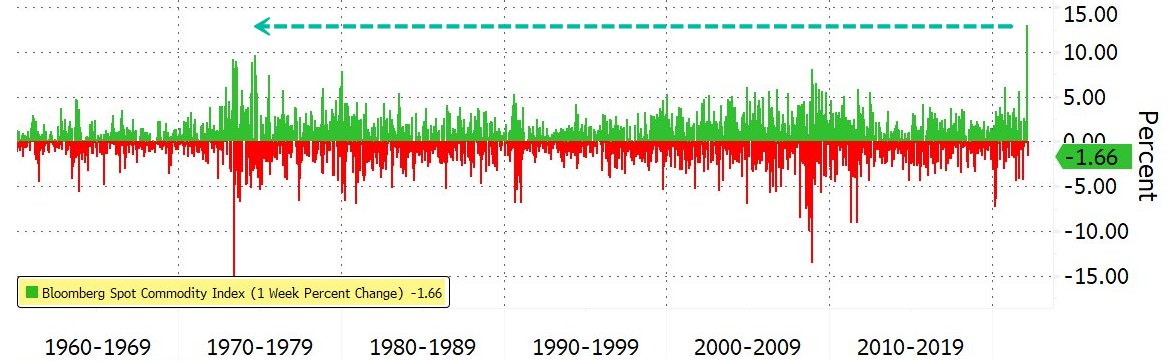
For weeks, we've detailed how Russia's invasion of Ukraine has sparked one of the most significant commodity shocks the world has ever experienced. It even supersedes changes to commodity markets in the 1970s and involves every commodity from grain to fertilizer to crude to metals. 

In a series of charts (provided by Bloomberg), we will show just how the Ukrainian conflict and Western sanctions on Russia are choking the world's supply of natural resources, driving up prices. 

Russia is a top exporter of many commodities.

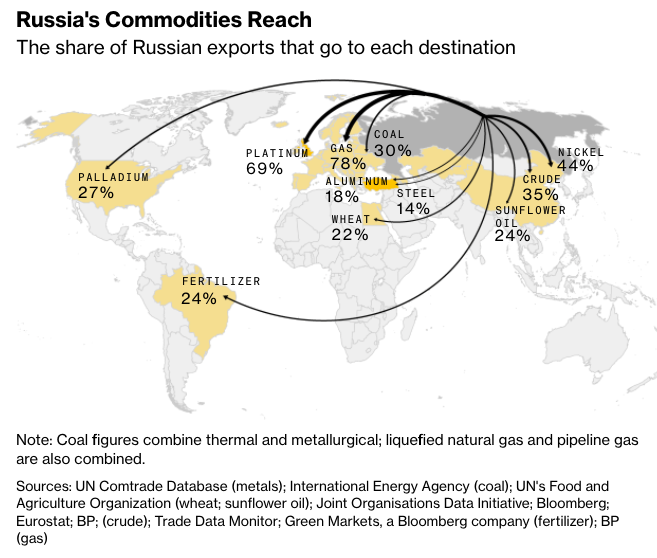
Here is the share of Russian exports for each region of the world. The U.S. and allies implementing bans on Russian crude and other commodity exports have disrupted global trade and unleashed supply constraint fears (here's why banning Russian crude imports is risky). 
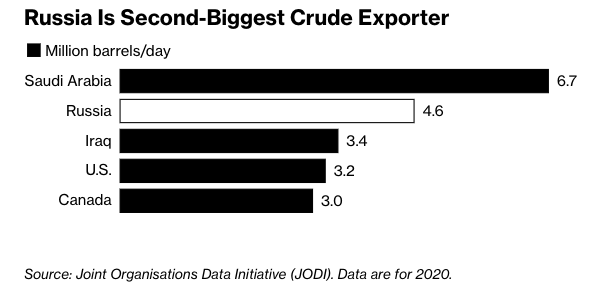
Anyone who has filled up their fossil fuel vehicle has noticed prices at the pump have soared since the invasion. That's because Russia is the second-largest crude exporter globally, behind Saudi Arabia. The U.S., U.K., and Canada have banned imports of Russian imports, sending energy markets into turmoil. 
 

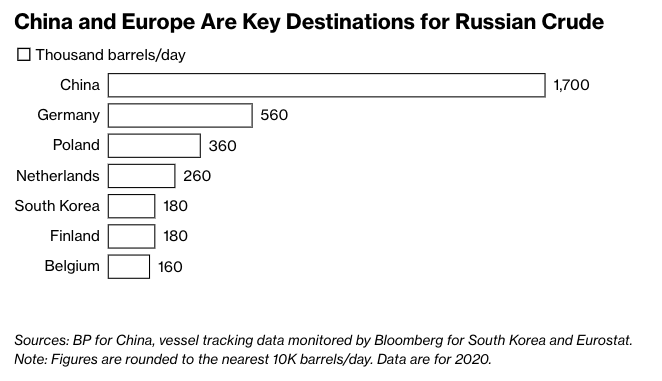
China, Germany, Poland, and the Netherlands are some of the top regions that receive Russian crude. Any loss of oil will impact refineries and their ability to produce crude products. 
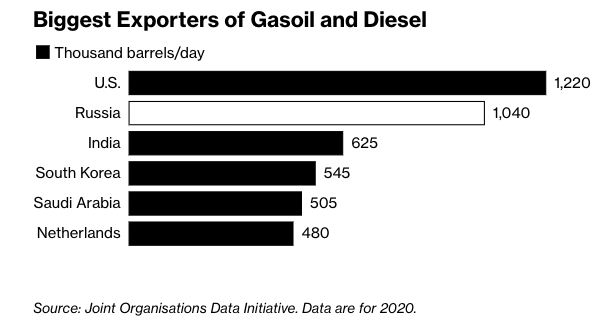
Russia is the second-largest exporter of gasoline and diesel, right behind the U.S. Their largest export market is Europe. 
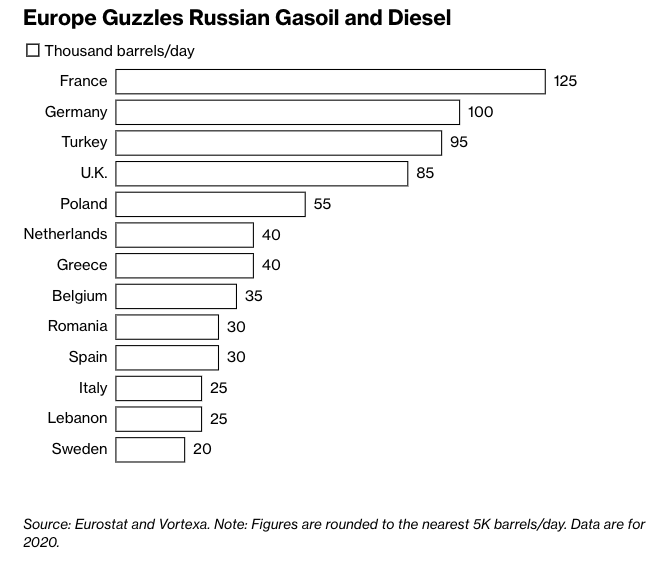
France, Germany, Turkey, and the U.K. guzzle the most Russian gasoline and diesel per day by volume. A supply shock has already caused soaring prices and shortages as European countries shun purchases from Russia. 
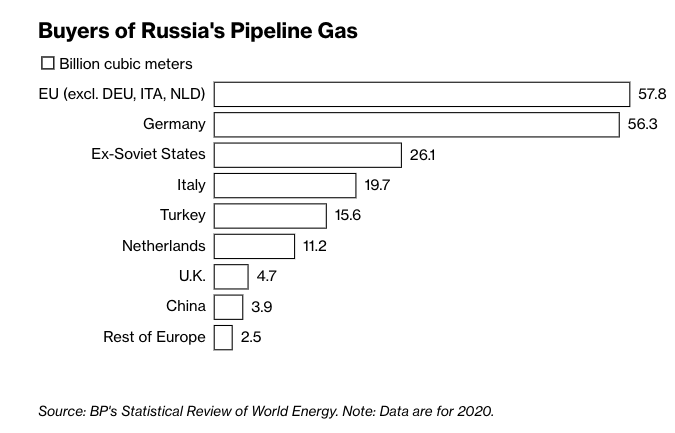
Russia also happens to be the largest exporter of natural gas. Most of it ends up in Europe. Moscow has already threatened to cut supply as European leaders search for suppliers elsewhere. 
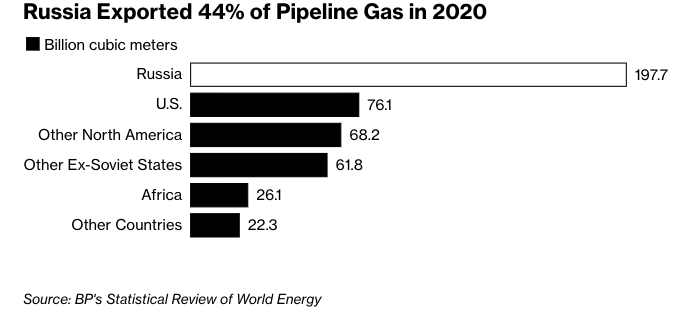
 

Germany is the largest receiving country of Russian natgas through pipelines. 
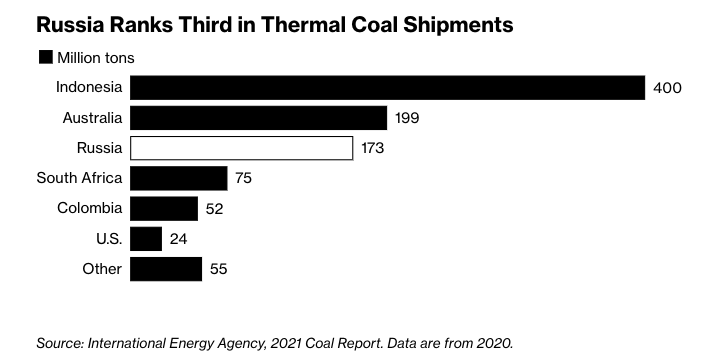
Russia is third in the world for thermal coal exports used in power plants. Europe is the largest buyer of Russian coal. 
 

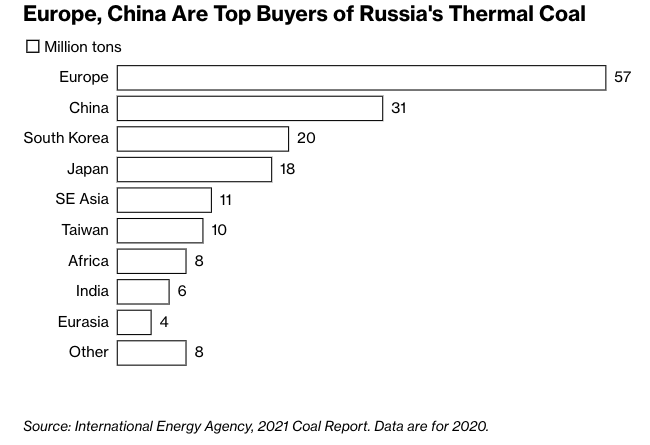
Here are the largest buyers of Russian thermal coal. 
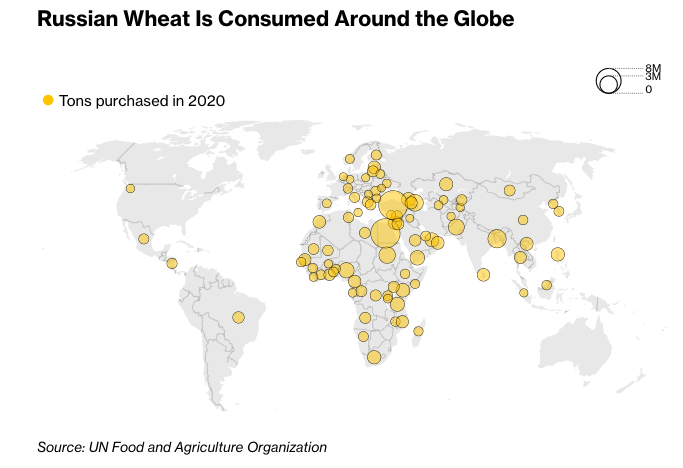
When it comes to agricultural exports, Russian wheat is exported worldwide. Russia and Ukraine have halted wheat exports that will impact global food supplies. The outcome could be an imminent starvation crisis. One could also be brewing in the US. 
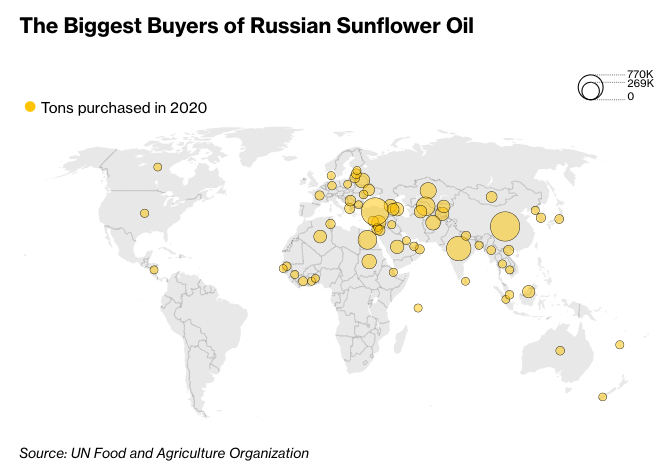
As for edible oils, Russia is the second-biggest shipper of sunflower oil. 
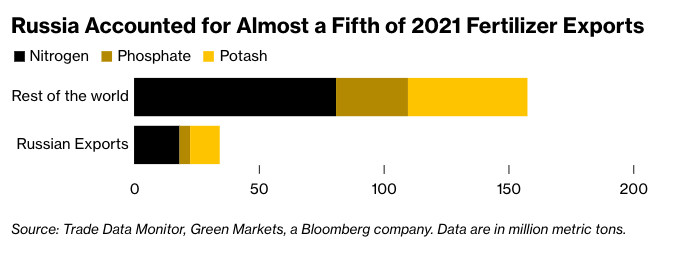
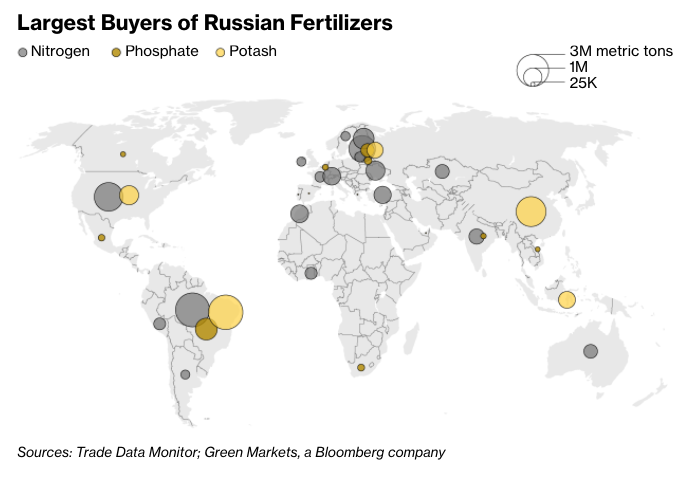
Russia is also a top supplier of fertilizer. Moscow has reduced or halted nutrient exports

A decline in fertilizer exports will make it harder for farmers in Europe, South America, and Asia to have robust harvests this year that could strain the global food supply even more. 
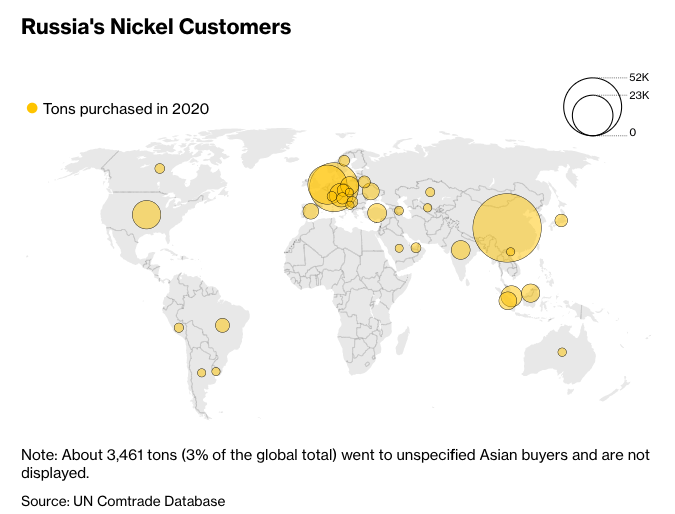
Russia is a key supplier of industrial and precious metals. It's among the top players in exporting nickel, a critical metal for electric car batteries. China, Europe, and the U.S. are the largest buyers of Russian nickel. Tesla has raised car prices twice in the last few weeks because of soaring nickel prices. 
Most of the world relies on Russian aluminum. 

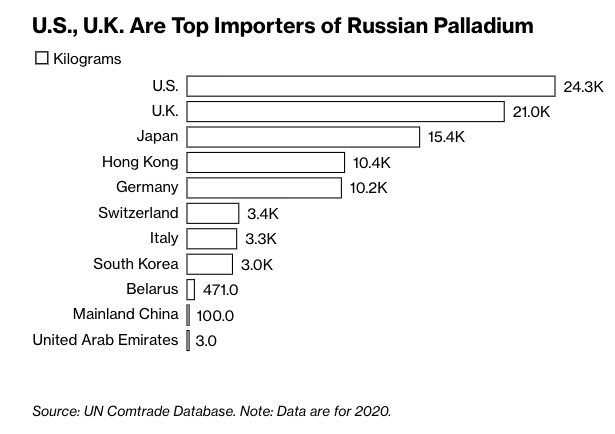
Russia is the second largest exporter of palladium and platinum in the world. 
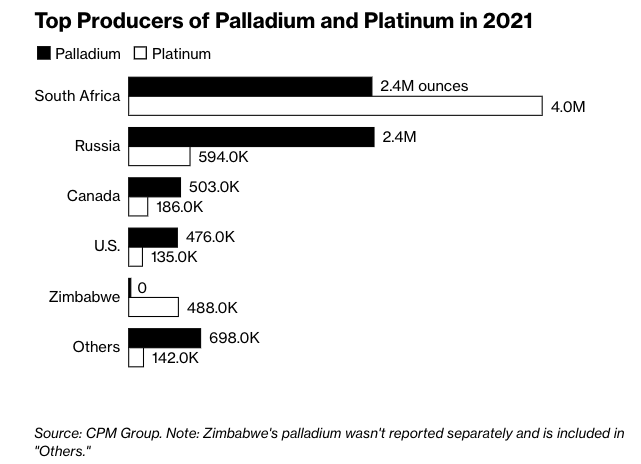
The US, UK, Japan, and Hong Kong are the top importers of Russian palladium, used primarily in catalytic converters for automobiles. 
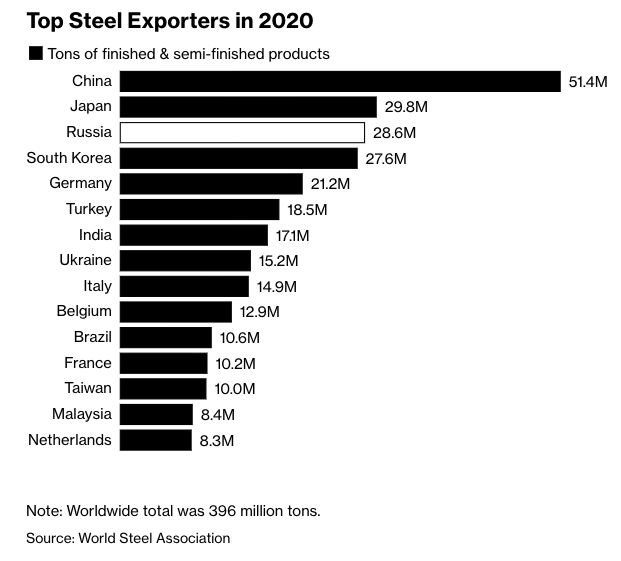
Russia is also the world's third-largest steel exporter. 
The West trying to isolate Russia from the global economy with devastating sanctions and restrict its trade worldwide produces unimaginable inflation that could send the world into a stagflationary hellhole (the US bond market is warning about impending doom). Shortages of commodities could develop as prices skyrocket.

Could all of these disruptions suggest the next world war has begun? Billionaire Bill Ackman thinks so.

Saturday, March 12, 2022

The problem with electric cars

Lots of important info in this article:

https://www.realclearenergy.org/articles/2022/03/09/joe_bidens_electric_car_plans_support_the_worlds_worst_humanitarian_abuses_820821.html

Joe Biden’s Electric Car Plans Support the World’s Worst Humanitarian Abuses

In his State of the Union Address on Tuesday, President Joe Biden promoted electric vehicles (EVs), trumpeting his plans to establish “a national network of 500,000 electric vehicle charging stations.” In so doing, Biden is unwittingly supporting the worst humanitarian abuses in the world. This is because of the way in which the materials used in manufacturing the batteries that power today’s EVs are obtained.

To obtain a reasonable amount of power per pound of battery weight, EV manufacturers generally use various forms of lithium-ion (Li-ion) batteries, so named because the battery’s positive electrode, called the cathode, is largely made up of the highly reactive metal lithium (Li). To keep the cathode stable when a battery is not in use, the lithium is combined in a metal oxide matrix, with different manufacturers using different combinations of metals.

Most EV manufacturers combine lithium with nickel, cobalt and manganese to create a Li-Ni-Mn-Co oxide matrix to form the cathode. Tesla substitutes aluminum (Al) for the manganese, yielding a Li-Ni-Co-Al oxide matrix for the cathode on their batteries. Tesla maintains that their formulae is more cost-effective as less cobalt is required.

In all cases, the negative electrode, called the anode, in an EV battery is composed mostly of graphite.

To support the huge EV expansion being promoted by Biden, we will need immense quantities of the materials needed to manufacture EV batteries, for example, lithium, cobalt, graphite, nickel, manganese and aluminum. Let’s consider the sources of just three of these substances—lithium, cobalt and graphite—to see where the human rights issues arise.

In a normal 1,000-pound Li-ion EV battery, there is about 25 pounds of lithium. Since lithium brines typically contain less than 0.1% lithium, about 25,000 pounds of brines are needed to get the 25 pounds of pure lithium. This is mainly extracted from Tibet and the highlands of Argentina-Bolivia-Chile (according to the U.S. Geological Survey, 58% of the world’s lithium reserves are found in Chile) known as the “lithium triangle.” Lithium production in Tibet results in dead, toxic fish, and carcasses of cows and yaks floating down the Liqi River. The Ganzizhou Rongda Li mine in Tibet has thoroughly poisoned this river.

Similarly, native peoples in the lithium triangle face contaminated streams needed for human consumption, livestock watering, irrigation systems with mountains left desolate over discarded salt from the lithium brining process. A report titled, “COMMODITIES AT A GLANCE Special issue on strategic battery raw materials” issued in 2020 by the United Nations Conference on Trade and Development explained: 

“Indigenous communities that have lived in the Andean region of Chile, Bolivia and Argentina for centuries must contend with miners for access to communal land and water. The mining industry depends on a large amount of groundwater in one of the driest desert regions in the world to pump out brines from drilled wells. Some estimates show that approximately 1.9 million litres of water is needed to produce a tonne of lithium. In Chile’s Salar de Atacama, lithium and other mining activities consumed 65 per cent of the region’s water. That is having a big impact on local farmers – who grow quinoa and herd llamas – in an area where some communities already must get water driven in from elsewhere.”

A 1,000-pound Li-ion EV battery typically also contains about 30 pounds of cobalt. Cobalt ore grades average about 0.1%, so we need to process almost 30,000 pounds of ore to get 30 pounds of cobalt. With 50% of the world’s cobalt reserves, the Democratic Republic of Congo contributes almost two-thirds of global cobalt production. This is causing immense humanitarian abuses. Congo has at least 40,000 children—some as young as 4-years old—working with their parents for less than $2 a day. They are exposed to multiple psychological violations and abuse as well as significant physical risks. Engineer and energy consultant Ronald Stein and Todd Royal, an independent public policy consultant focusing on the geopolitical implications of energy, go into more details in their book Clean Energy Exploitations – Helping citizens understand the environmental and humanity abuses that support ‘clean’ energy”:

“Cave-in’s, constant exposure to toxic, radioactive water, dust, and dangerous air loaded with cobalt, lead, and uranium with other heavy metals breathed into lungs day-after-day so western citizens can feel good about their Tesla or wind turbine. Cobalt ore is sent to China since one of the larger mines in the Congo is Chinese-owned Congo Dongfang International Mining Company.”

A 1,000-pound EV battery also has 110 pounds of graphite. At 10% concentration, 1,100 pounds of ore must be processed for each battery. China is now producing about 70% of the global supply of natural graphite. Villagers living near graphite companies in provinces in Northeast China complain of “sparkling night air,” crop damage, homes and belongings covered in soot and polluted drinking water.

In his State of the Union address, Biden spoke of promoting “environmental justice” and “expanding fairness.” The president said, “I will be honest with you, as I’ve always promised.”

Biden must now be honest about electric vehicles. They grossly violate basic environmental justice principles and are anything but fair to the poor of the world who suffer and die so that wealthy western elites can virtue signal with their electric vehicles.

Tom Harris is Executive Director of the Ottawa, Canada-based International Climate Science Coalition.

Sun-driven climate

  Electroverse @Electroversenet Astrophysicist Dr Willie Soon says the climate is driven overwhelmingly by the sun, not by human carbon diox...